It surprises people who know Umm Kulthum only as a voice: for eleven years she was also a movie star. Between 1936 and 1947 she starred in six musical films, all built around her singing, all commercial successes — and then she walked away from the screen for good, with nearly three decades of her career still ahead of her. The films are a genuine chapter of her story, not a footnote, and the reasons she entered the cinema and the reasons she left it tell you a great deal about what kind of artist she was. (Every song from all six films — nearly fifty in all — is tabled, with lyricist and composer, in The Complete Umm Kulthum Song List.)
Talaat Harb’s Wager: Widad (1936)
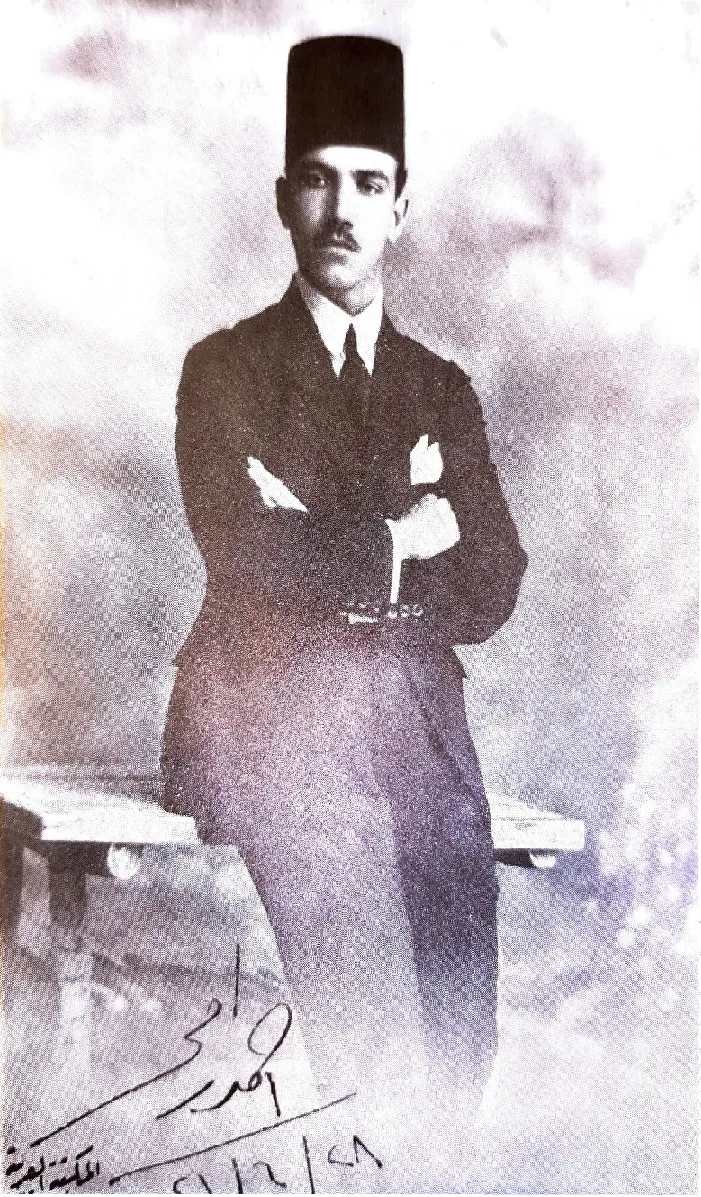
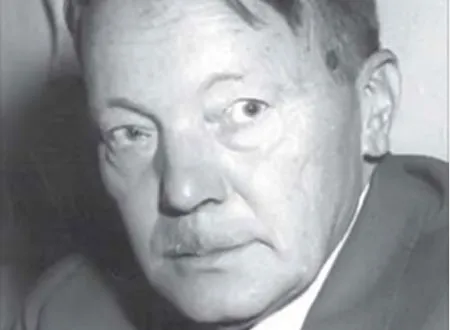
Egyptian cinema’s founding institution, Studio Misr, was created in 1935 by the nationalist financier Talaat Harb as part of his project of building Egyptian-owned modern industries. For the studio’s first feature film he needed a guarantee of success, and the logic of the moment supplied one: musical films were the proven formula — the singer Mohammed Abdel Wahab had already shown what a star’s name could do at the box office — and no name in Egypt was bigger than Umm Kulthum’s. The result was Widad (1936), directed by the German filmmaker Fritz Kramp, a costume melodrama in which she plays a slave singer of Mamluk-era Egypt whose devotion to her merchant master survives his ruin; when his fortune collapses, Widad gives up her jewelry and finally her own freedom to restore him. The story was shaped for her by her own artistic household — Ahmed Rami, the poet of her repertoire, worked on the film’s texts — and it closes with her singing “‘Ala Balad al-Mahbub,” a song that outlived the movie by decades.
Widad earned back Talaat Harb’s wager with interest. It was a box-office phenomenon, and it carried the flag abroad: in August 1936 it represented Egypt at the Venice film festival — the first Egyptian film to appear at an international festival — and Umm Kulthum herself attended a London premiere that autumn. The Egyptian film industry drew the obvious conclusion, and the singing film became its backbone for a generation.
The Badrakhan Years: Nashid al-Amal, Dananir, Aida
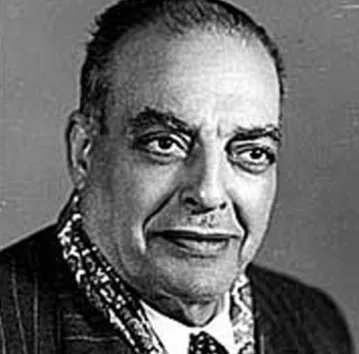
Her next three films were directed by Ahmed Badrakhan, the young Egyptian who became the specialist in filming her. Nashid al-Amal (“The Song of Hope,” 1937) moved her into modern dress: she plays a struggling mother whose voice is discovered and championed by a kind-hearted doctor, and who ends the film choosing marriage over the stage. The irony was visible even then — the real Umm Kulthum never subordinated her career to anyone — but the film gave her two enduring songs, “Ifrah Ya Albi” and the patriotic “Ya Shabab al-Nil.”
Dananir (1940) returned her to history, and to the setting that fit her gravity best: the Abbasid court of Harun al-Rashid, where she plays a singer whose loyalty to her patron Jaafar the Barmakid holds fast even after his spectacular fall. Critics have noted that the film plays less like cinema than like filmed musical theatre — which is precisely why it preserves something valuable: Umm Kulthum performing the courtly, classical register of her art in character. Aida (1942) tried something more experimental, transposing the outline of Verdi’s opera into an Egyptian story of a farmer’s daughter raised in a pasha’s household, with genuinely operatic sung passages — the closest she ever came to European art music — and, for the first time, flashes of on-screen humor.
Comedy and Realism: Sallama and Fatma
The last two films are the ones Egyptians rewatch most affectionately. Sallama (1945), directed by Togo Mizrahi, is set in the early Islamic era: she plays a singing slave girl loved by a pious man who disapproves of song — a premise that let the film debate, gently, the very legitimacy of her art. Its texts marked a real shift: alongside Rami’s classical verse came the colloquial wit of Bayram al-Tunisi, and from this world came Ghanni li Shwayya Shwayya, composed by Zakariyya Ahmad — “sing to me a little, a little” — one of the most beloved light songs she ever recorded, still sung today by people who have never seen the film it came from.
Fatma (1947), again under Badrakhan, was her farewell and her biggest popular success: a contemporary melodrama in which she plays a neighborhood nurse deceived into an unregistered marriage by an aristocrat’s family, then abandoned. It is the most realist of the six — the heroine’s singing cannot magically solve her troubles, and it is the solidarity of ordinary people that carries her — and it sent her off the screen with a bouquet of hits, “Ya Sabah al-Khayr” among them. She was in her late forties, at the height of her powers, and no one imagined it was the end. It was.
Why She Stopped
She never issued a formal explanation, and the accounts that survive point in several converging directions. There was a physical one: her chronic eye trouble made the glare of studio lighting genuinely painful. There was a matter of image: the cinema kept casting the most commanding woman in Egypt as a devoted slave or a wronged innocent, roles that sat ever more awkwardly against the sovereign public persona she had built. But the deepest reason was formal. Her art was durational and alive — an evening-long negotiation between singer, text, and audience, in which a line might be repeated a dozen ways until the hall ignited. The three-minute screen number cut against everything that made her herself. Consider what she was doing on the concert stage in the very same years: Salou Qalbi (1946), the majestic Ahmed Shawqi qasida, belongs to the season between her last two films — and points to where her art was actually going. After 1947 the monthly broadcast concert reached the entire Arab world at once; the cinema had nothing bigger to offer her, and despite recurring offers she never returned.
Afterlives
The six films never left circulation — Arab television has replayed them for over seventy years, and they remain the only extended moving images of Umm Kulthum outside her concert footage. When Egyptian critics marked the centenary of cinema in Egypt in 1996 with a poll, held under the Cairo International Film Festival, to choose the hundred best Egyptian films, Dananir found a place on the list — and Widad’s 1936 Venice screening keeps its historical rank as Egyptian cinema’s first appearance on the international stage. The cinema also kept returning to her as a subject: the American documentary Umm Kulthum: A Voice Like Egypt (1996), directed by Michal Goldman, narrated by Omar Sharif, and built on Virginia Danielson’s biography, introduced her to Western audiences; Egyptian television dramatized her life in a popular 1999 serial; and the Iranian artist Shirin Neshat’s feature Looking for Oum Kulthum (2017) made the very impossibility of capturing her on film its subject. That last idea is one her own six films had already demonstrated. The camera got her likeness; the voice, as her funeral proved, belonged to something larger than any screen.