Listen to an Umm Kulthum recording from the 1920s and one from the 1960s back to back and the most obvious change is not her voice — it is everything around it. She began her Cairo career in front of a takht, the intimate chamber ensemble of classical Arab music, and ended it in front of a firqa of several dozen players. The story of that growth is the story of twentieth-century Egyptian music in miniature.
The Classical Takht
The word takht comes from a Persian term for a platform or bench: the ensemble small enough to share one. In its classic form it gathers five instruments, each with a defined role.
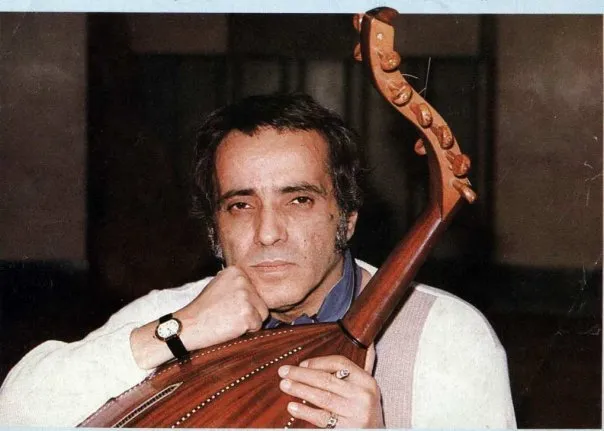
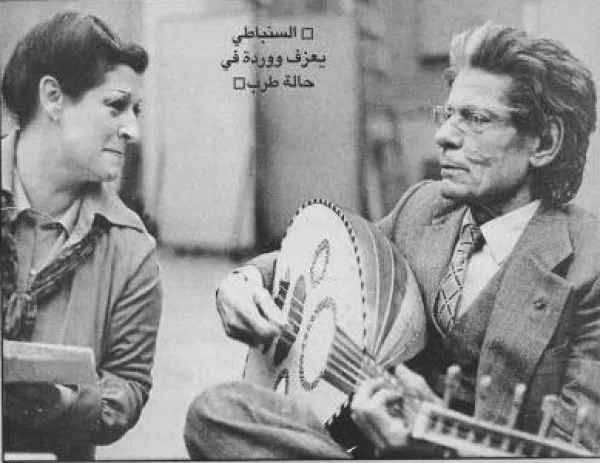
The oud, the fretless short-necked lute, is the ensemble’s warm center — capable of both plucked melody and rhythmic drive, and the instrument on which most composers of the era, including Mohammed Abdel Wahab and Riad al-Sunbati, worked out their melodies. The qanun, a plucked zither of some seventy-plus strings laid over a trapezoid box, supplies brilliance and ornament; small levers let the player adjust pitches mid-performance, which makes it the takht’s most agile guide through the maqam system. The nay, an end-blown reed flute, is the breath of the ensemble — the instrument that sounds closest to the human voice. The violin (kamanja in Egyptian usage), adopted from Europe in the nineteenth century but retuned and played with Arab intonation, brought a singing sustain the older bowed instruments could not match. And the riqq, a small tambourine with heavy brass jingles, is the timekeeper: in skilled hands it commands an orchestra’s worth of rhythmic nuance from a frame the size of a dinner plate.
A takht does not play in harmony in the Western sense. All instruments trace the same melodic line together, each ornamenting it according to its nature — a texture called heterophony, in which unity and individuality coexist in every bar.
From Takht to Firqa
When Umm Kulthum established herself in Cairo in the 1920s, a takht of this kind was the standard accompaniment for a serious singer, and she hired the best players in the city. But recordings, cinema, and above all radio changed the scale of the music. Composers who had heard European orchestras — Abdel Wahab most influentially — began adding massed violins, cello, and double bass. The intimate takht swelled into the firqa: a stage-filling orchestra built on a large violin section, with the traditional instruments seated at its heart.
Umm Kulthum’s own ensemble grew with the times. By the 1960s her concerts presented a firqa of dozens, and composers wrote for its new possibilities: the surging string introductions of Enta Omri, or the extended orchestral preludes Baligh Hamdi built for Alf Leila wa Leila, which fold newer colors — accordion and electric keyboard instruments among them — into the older sound. Crucially, the firqa never abandoned the takht’s soul: the qanun, nay, oud, and riqq kept their solo voices, and the heterophonic instinct survived inside the larger frame.
Her Musicians
The players Umm Kulthum gathered around her were celebrities in their own right — virtuosos whom radio listeners knew by the sound of a single phrase, and whom concert audiences greeted with applause reserved elsewhere for the singer alone. She rehearsed them exactingly and kept many for decades; the ensemble’s continuity is one reason her sound stayed recognizable across changing styles. Contemporary accounts describe her musicians less as accompanists than as a repertory company: a bench of soloists, each waiting for the moment in the evening when the spotlight would swing briefly to them.
The Art of the Instrumental Break
Those moments mattered, because in this tradition instruments do not merely support the voice — they converse with it. Three forms of instrumental speech shaped every concert.
The muqaddima, the orchestral introduction, could run many minutes before the singer uttered a word, planting the maqam and the principal themes in the audience’s ear and raising anticipation to a controlled boil. The taqsim, an unmetered solo improvisation, let a single player explore the maqam freely — a moment of individual eloquence inside the collective form. And the lawazim, the short fills between vocal phrases, answered the singer line by line, echoing or embellishing what she had just sung.
In performance these exchanges became a feedback loop with the audience: a fine taqsim or a perfectly placed lazima drew cries of appreciation, which fed the players, which lifted the singer in turn. The orchestra, in other words, was not a backdrop. It was the other half of the conversation — and understanding it is half of understanding why an Umm Kulthum song could hold an audience for an hour without releasing its grip.