Hob Eih (What Kind of Love?) حب إيه
1960 · Maqam Bayati
Hob Eih (1960): Baligh Hamdi's first melody for Umm Kulthum — Abdel Wahab Mohamed's defiant colloquial lyric in maqam Bayati. Meaning and translation explained.
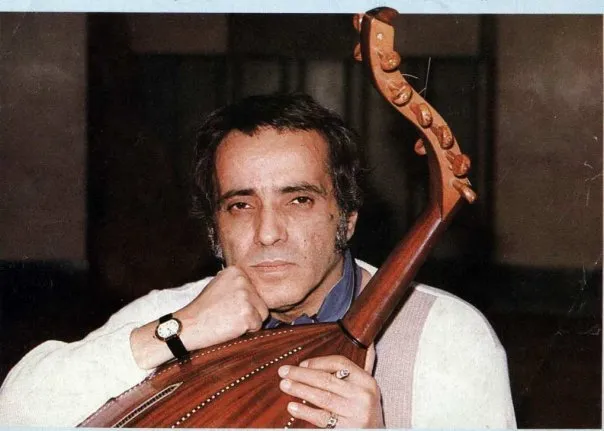
Composer
بليغ حمدي
1931–1993
Baligh Hamdi was not yet thirty when Umm Kulthum, then past sixty, gambled on him with "Hobb Eih" (1960) — and won a new youth. The Cairo-born composer, already a rising force in Egyptian song, brought her the sound of the 1960s street: melodies rooted in Egyptian folk idiom, forward-driving dance rhythms, and catchy instrumental refrains that framed her voice like a modern hit record. Their partnership produced "Ansak" (1961), "Sirat el Hobb" (1964), "Fat el Maad" (1967) and finally "Alf Leila wa Leila" (1969), whose orchestral prelude became one of the most recognizable openings in Arabic music. Beloved also for his work with Abdel Halim Hafez, Warda and Shadia, Hamdi renewed her audience without diluting her authority. His signature is the folk-rooted tune of instant memorability, dressed in a modern arranger's colors — proof that the most venerated classical voice in the Arab world could still command the radio charts. He died in 1993.
1960 · Maqam Bayati
Hob Eih (1960): Baligh Hamdi's first melody for Umm Kulthum — Abdel Wahab Mohamed's defiant colloquial lyric in maqam Bayati. Meaning and translation explained.
1964
Sirat El Hob (1964): Umm Kulthum's confession of a lifetime spent fearing love — Morsi Gamil Aziz's lyric, Baligh Hamdi's setting, meaning & translation.
1965 · Maqam Bayati
Baeed Anak (1965): Baligh Hamdi's maqam Bayati hit for Umm Kulthum — 'far from you, my life is torment.' Annotated excerpts, translation, and the song's story.
1969 · Maqam Farahfaza
Alf Leila wa Leila (1969): Baligh Hamdi's nocturne for Umm Kulthum — maqam Farahfaza, the night-long refrain, and why one night outweighs a thousand and one.
1971
El Hob Kollo (1971): Umm Kulthum returns after mourning Nasser — Ahmad Shafiq Kamel's lyric, Baligh Hamdi's score. Meaning and translation of 'all the love'.
History
Umm Kulthum's legacy since 1975: monthly radio broadcasts, praise from Bob Dylan, the Cairo museum on Roda Island, hologram concerts, and streaming rediscovery.
The Ensemble
How Umm Kulthum's accompaniment grew from the five-player takht — oud, qanun, nay, violin, riqq — into the sweeping firqa heard on her later recordings.
History
Umm Kulthum died on 3 February 1975. Her final illness, the Cairo funeral that drew millions, the seized bier, her Basatin mausoleum, and the Arab world's mourning.
Concepts
New to Umm Kulthum? A step-by-step listening guide: which songs to start with, from Enta Omri to Al-Atlal, and how to enjoy her hour-long live tarab recordings.
History
The complete Umm Kulthum songs list, decade by decade from 1924 to 1973: every recorded song with its year, lyricist, and composer — nearly 320 works in all.
The Ensemble
The composers behind Umm Kulthum: Qasabgi, Zakariyya Ahmad, Riad al-Sunbati, Mohammed Abdel Wahab, and Baligh Hamdi — and the sound each one gave her.