Hadhihi Laylati (This Is My Night) هذه ليلتي
1968 · Maqam Bayati
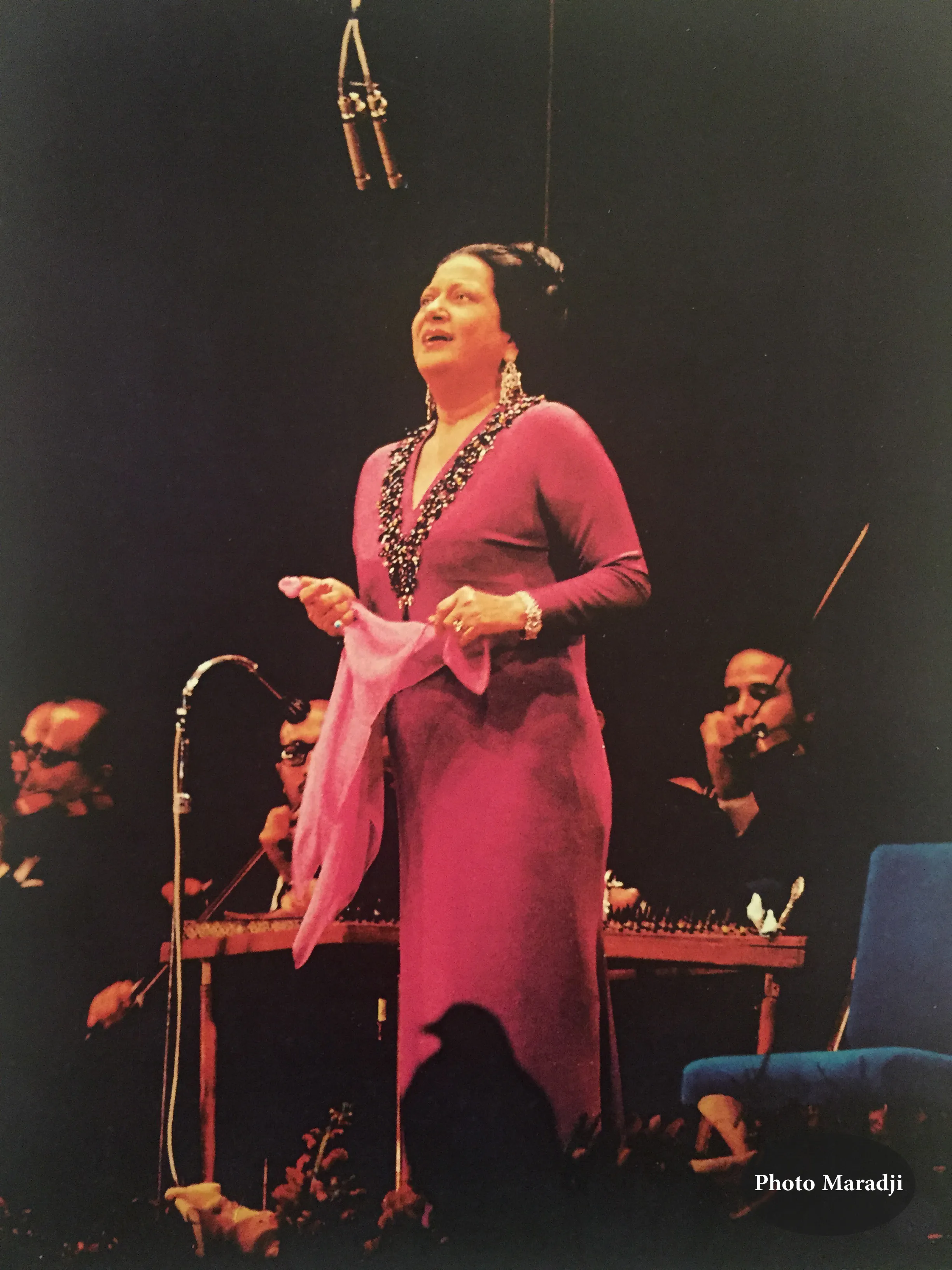
Hadhihi Laylati (1968): George Jardaq's qasida set by Abdel Wahab in maqam Bayati — the night Umm Kulthum returned to the Cairo stage after 1967. Meaning & translation.
Era · 1967–1975
سنوات الذروة الأخيرة
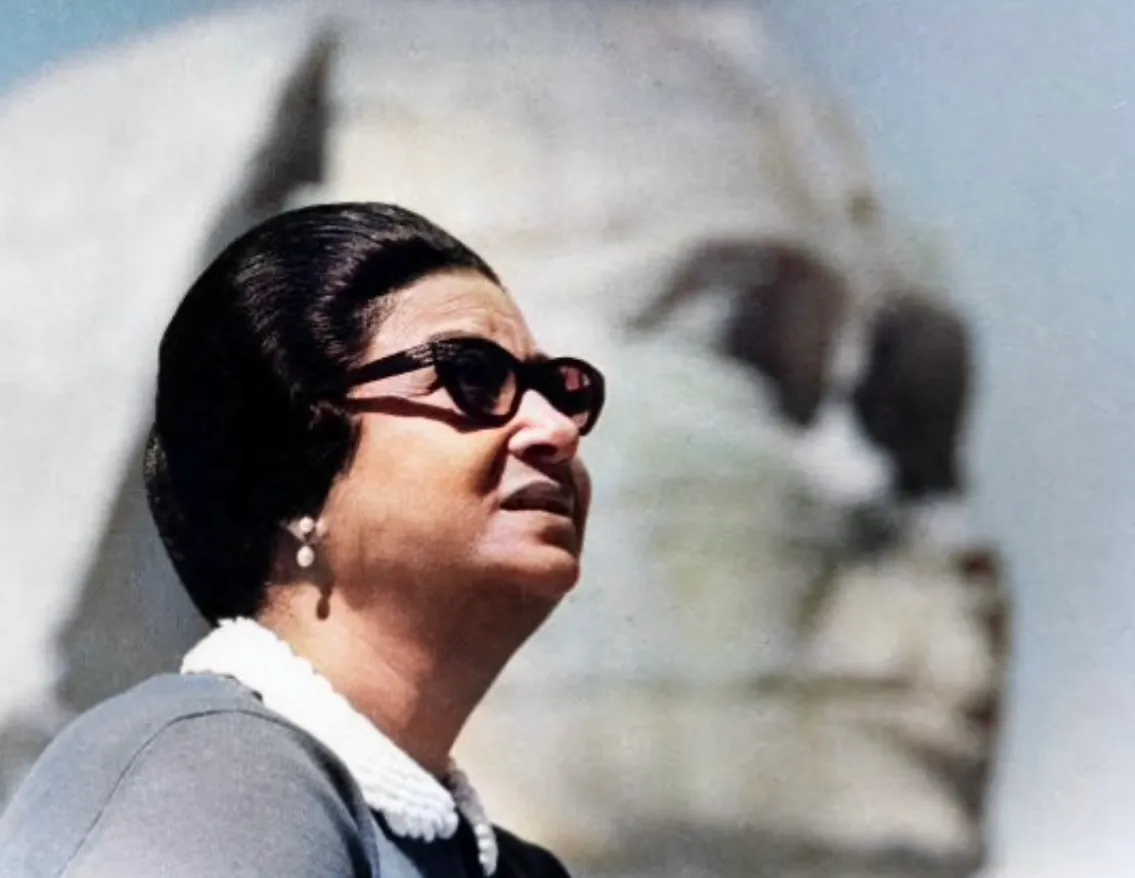
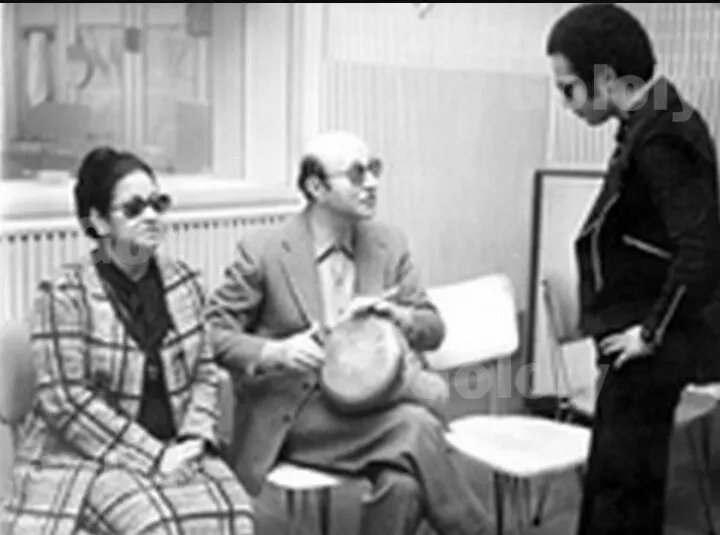
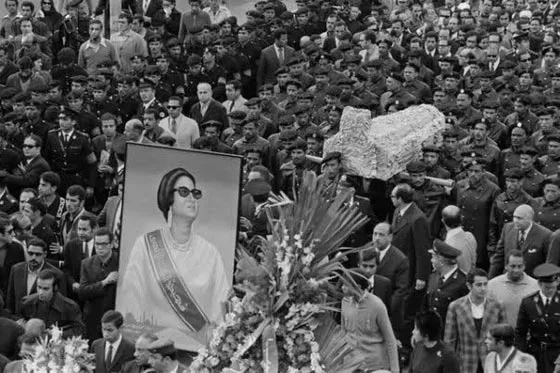
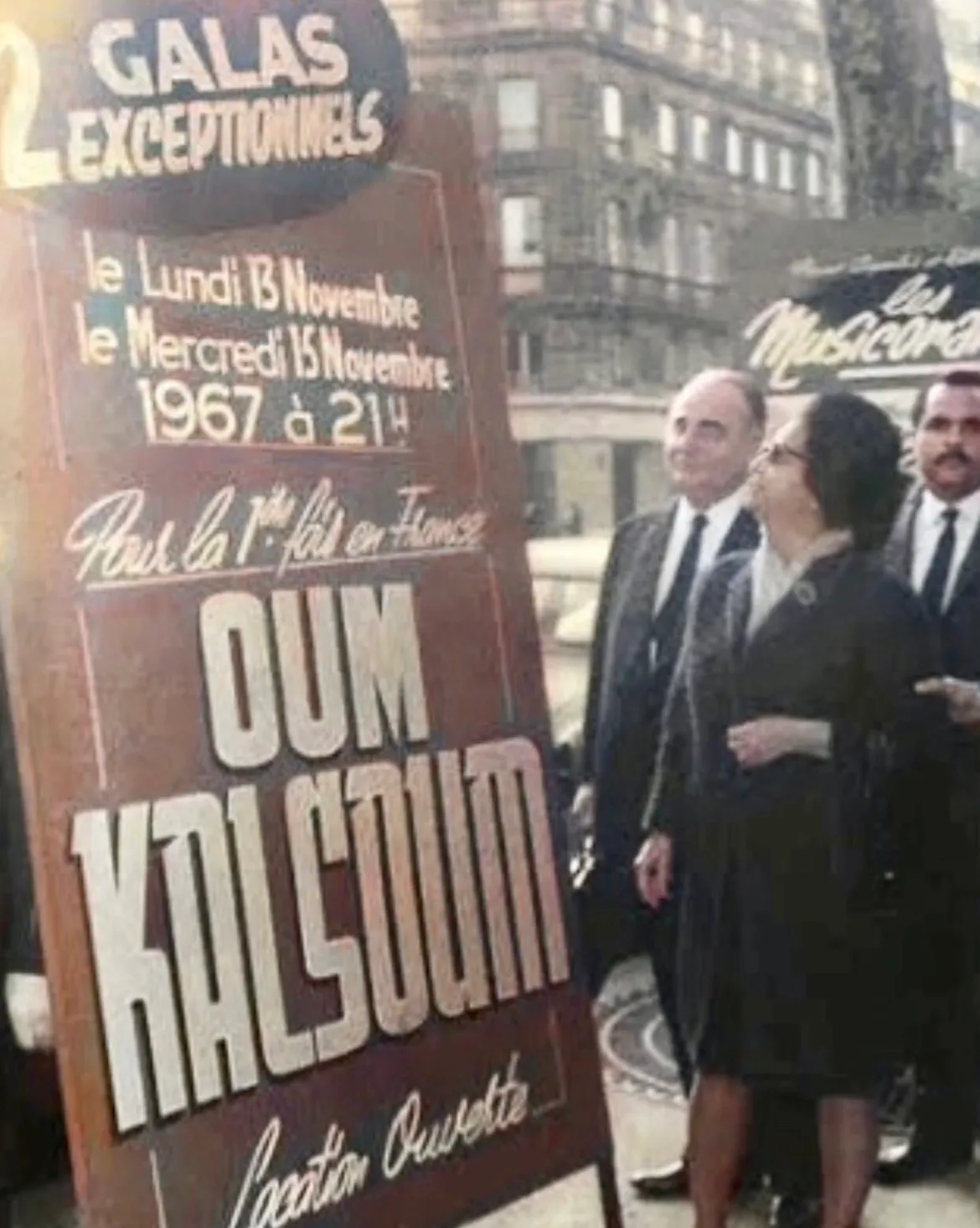
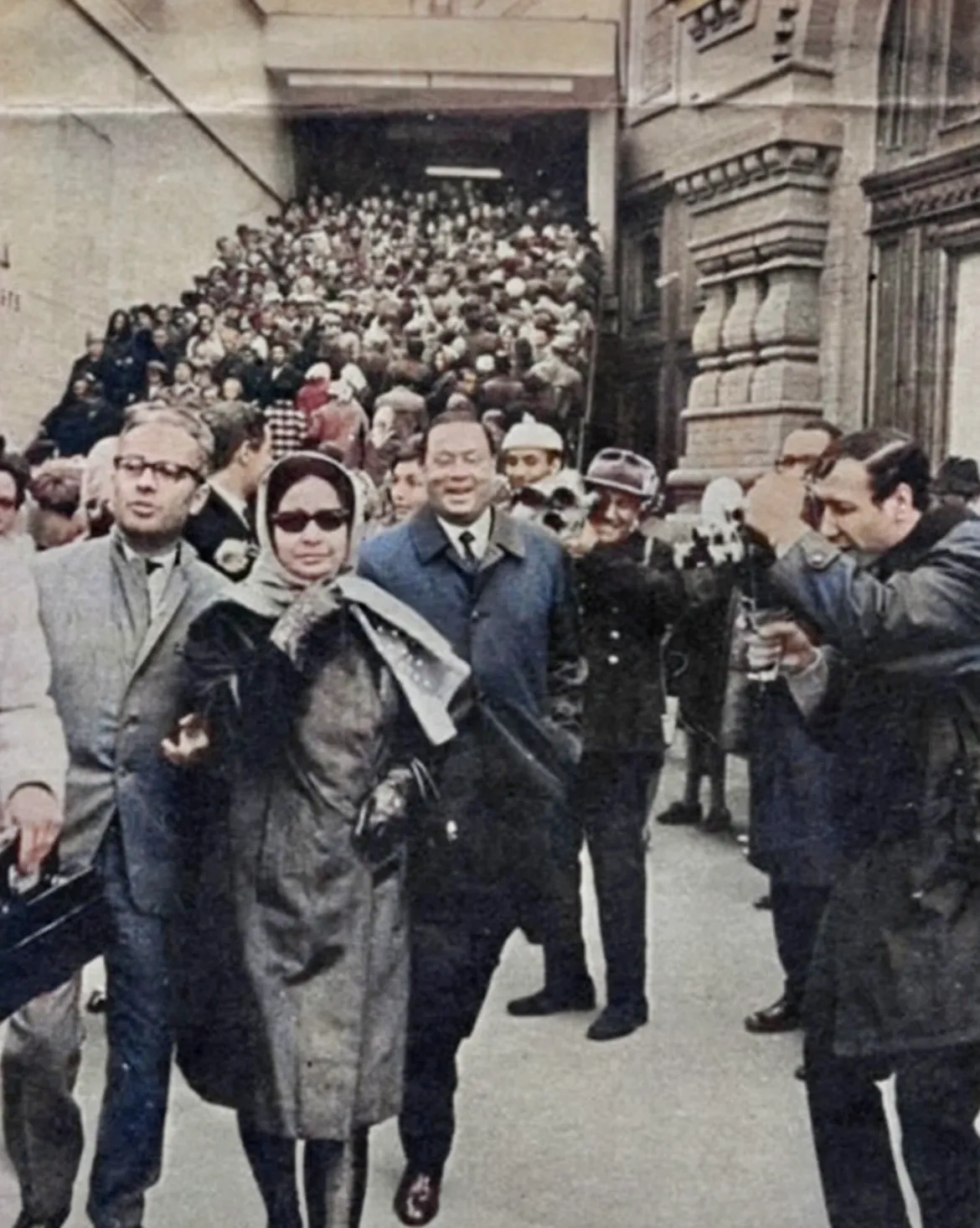
The defeat of June 1967 remade Umm Kulthum, then nearing seventy, as a fundraiser for the nation. She launched a campaign of concerts for the Egyptian war effort, touring Arab capitals and singing, in November 1967, at the Olympia in Paris — her only concerts outside the Arab world — and donating the proceeds, ultimately raising millions of pounds for the treasury. Artistically these were the monumental years: with Baligh Hamdi came "Alf Leila wa Leila" (1969), an hours-long celebration of love and night whose orchestral prelude is among the most recognizable in Arabic music; with Mohammed Abdel Wahab came "Aghadan Alqak" (1971) and "Leilet Hobb" (1973), among her final premieres. Failing health — kidney disease had shadowed her for years — finally forced her from the stage; she gave her last full concert in December 1972. When she died on 3 February 1975, Cairo produced one of the largest funerals in Egypt's history: millions of mourners filled the streets, carrying her coffin for hours in a procession the state could neither lead nor control. The Arab world still calls her simply al-Sitt — the Lady.
1968 · Maqam Bayati
Hadhihi Laylati (1968): George Jardaq's qasida set by Abdel Wahab in maqam Bayati — the night Umm Kulthum returned to the Cairo stage after 1967. Meaning & translation.
1969 · Maqam Farahfaza
Alf Leila wa Leila (1969): Baligh Hamdi's nocturne for Umm Kulthum — maqam Farahfaza, the night-long refrain, and why one night outweighs a thousand and one.
1970 · Maqam Rahat al-Arwah
Daret El Ayyam (1970): Mamoun al-Shinnawi and Mohammed Abdel Wahab's late masterpiece for Umm Kulthum — quarrel, reunion, and dawn after estrangement.
1971 · Maqam Ajam
Aghadan Alqak (1971): al-Hadi Adam's poem of fearful anticipation, set by Abdel Wahab in maqam Ajam — one of Umm Kulthum's last great premieres. Meaning & translation.
1972 · Maqam Rast
Ya Msaharni (1972): Sayed Mekawy's only melody for Umm Kulthum and Ahmed Rami's last lyric — a sleepless reproach in maqam Rast. Excerpts and commentary.
1971
El Hob Kollo (1971): Umm Kulthum returns after mourning Nasser — Ahmad Shafiq Kamel's lyric, Baligh Hamdi's score. Meaning and translation of 'all the love'.