Songs
أمل حياتي Amal Hayati (Hope of My Life)
- Year
- 1965
- Lyricist
- Ahmad Shafiq Kamel
- Composer
- Mohammed Abdel Wahab
- Maqam
- Kurd
Short excerpts are quoted here for commentary and study; the complete lyrics remain under copyright. The annotations and the essay below tell the whole story.
Lines marked with a gold ornament carry a note — select one to read it.
أمل حياتي
Amal hayati
Hope of my life —
The title phrase is an address, not a description: the beloved is spoken to as "hope of my life" before anything else is said. Abdel Wahab sets it in maqam Kurd, a mode whose soft, minor-hued warmth Arab listeners associate with tenderness rather than grandeur — the melodic climate of intimacy, established in the first breath.
"Amal Hayati" premiered in December 1965 at the Qasr al-Nil cinema hall in Cairo. It was the second fruit of the famous "meeting of the clouds" — the collaboration between Umm Kulthum and Mohammed Abdel Wahab that had begun the year before with "Enta Omri" — and it confirmed that their first triumph was no accident.
يا حب غالي ما ينتهيش
Ya hubb ghali ma yentahish
O precious love that never ends,
A love "that never ends": Ahmad Shafiq Kamel, the same lyricist who wrote "Enta Omri," works in a colloquial Egyptian of deliberate simplicity. The line has no rare words and no ornament — its force is the force of something anyone could say, sung by the one voice that could make it monumental.
يا أغلى من حياتي
Ya aghla min hayati
dearer to me than life itself
"Dearer than my life" is the classic hyperbole of Arabic love poetry, but delivered in street Arabic it lands as confession rather than convention. Umm Kulthum lingers on "aghla" (dearer, more precious), letting the word carry the whole economy of the sentiment.
خليني جنبك خليني
Khallini gambak khallini
Keep me beside you, keep me,
The refrain that everyone remembers. "Khallini" — keep me, let me stay — is repeated until repetition itself becomes the meaning: the plea to remain is enacted by a melody that refuses to leave. In concert this passage drew roars from the audience, and she would circle back to it again and again, each return more suspended than the last.
في حضن قلبك خليني
Fi hodn albak khallini
keep me in your heart's embrace
"In your heart's embrace" compresses the whole song into an image of shelter. Around such intimate lines Abdel Wahab built a strikingly modern frame: he brought the electric guitar and the organ into the traditional takht ensemble for this song, a touch of orchestral modernism that delighted younger listeners in 1965 and scandalized a few purists.
وسيبني أحلم
W sibni ahlam
And let me dream —
The lover asks not for possession but for permission to dream — love as a sleep one hopes never to wake from. It is the gentlest wish in the Kulthum repertoire, and Abdel Wahab answers it with one of his most floating, unhurried melodic lines.
يا ريت زماني ما يصحنيش
Ya reit zamani ma yesahhinish
if only time would never wake me
"Zamani" — my time, my fate — is the quiet antagonist of the song. Time is the thing that wakes dreamers, and the singer bargains with it directly. In performance she stretched "ma yesahhinish" ("may it not wake me") across long arcs of breath, as if postponing the waking by sheer vocal will.
What this song means
When Umm Kulthum and Mohammed Abdel Wahab finally joined forces in 1964, the Arab press called it “the meeting of the clouds” — two forces of nature that had circled each other for forty years. “Enta Omri” was the thunderclap; “Amal Hayati,” premiered in December 1965 at the Qasr al-Nil cinema hall in Cairo, was the proof that the storm could strike twice. Written, like its predecessor, by Ahmad Shafiq Kamel, it remains one of the most beloved love songs in the Arabic language.
The premise could not be simpler. The beloved is addressed as “hope of my life,” and the singer asks for exactly one thing: to stay — beside you, in the embrace of your heart, inside the dream. There is no plot, no betrayal, no ruin. Where “Al-Atlal” a year later would mourn love as wreckage, “Amal Hayati” petitions for love as shelter. The only enemy in the song is time itself, personified as the force that wakes dreamers, and the most touching line in the lyric is a bargain struck against it: let me dream, and may my time never wake me.
Abdel Wahab set this plea in maqam Kurd, a mode of soft, dusk-colored tenderness, and wrapped it in the orchestral modernism that was his signature in the 1960s. Alongside the traditional strings and qanun, listeners at the premiere heard an electric guitar and an organ — instruments that had no ancestry in the takht tradition. The gesture was calculated: Egypt’s youth were drifting toward shorter, Western-tinged songs, and Abdel Wahab’s genius was to smuggle the new sounds into the old long-form frame, so that a twenty-year-old and a seventy-year-old could be moved in the same hall by the same phrase.
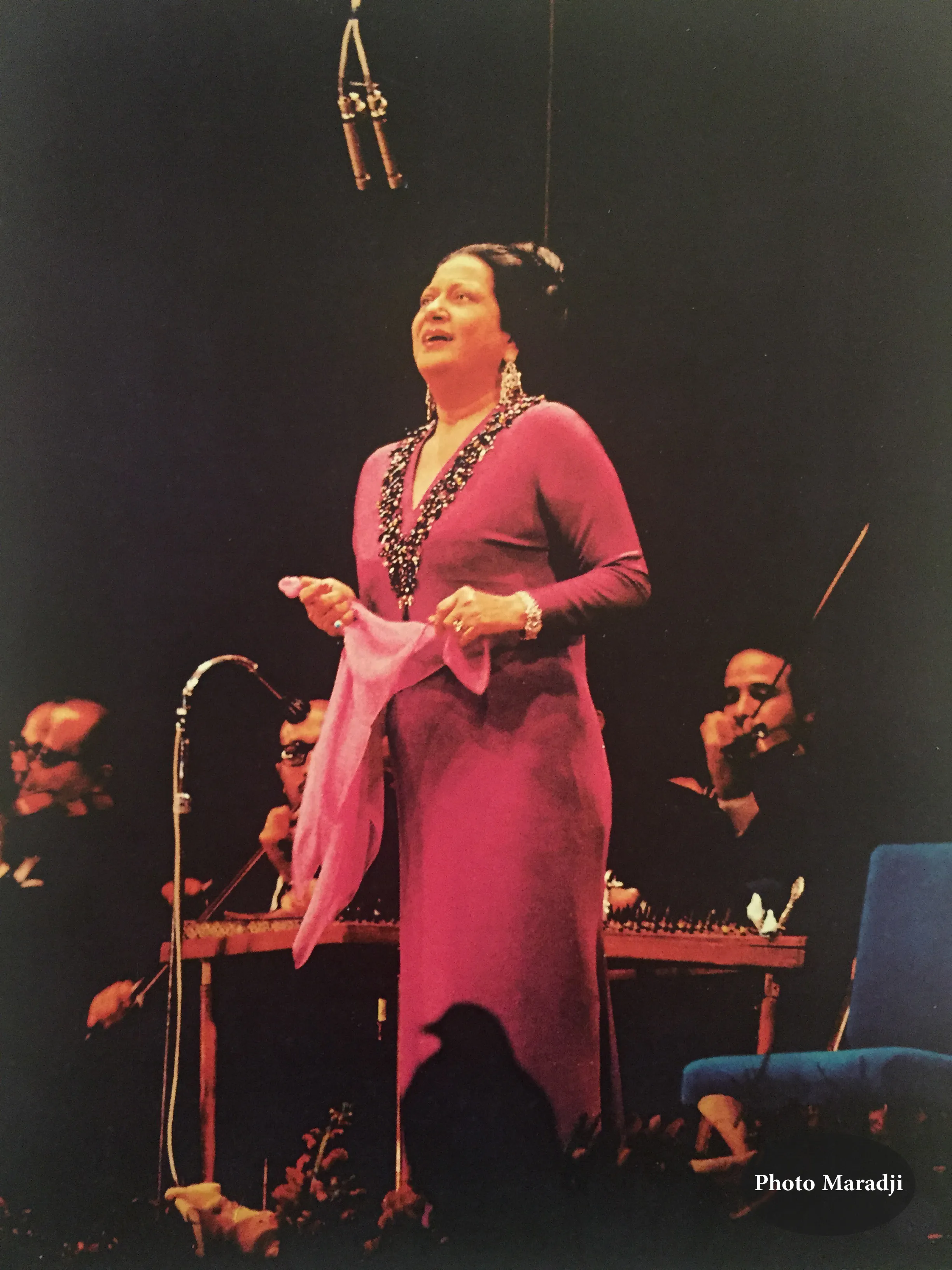
What performance made of the song is the real story. The “khallini” refrain — keep me, keep me — is built from a short melodic cell designed for return, and Umm Kulthum returned to it relentlessly, re-shading it with each pass until repetition became the message: a music that refuses to leave, pleading to remain. Live recordings stretch the song well past the hour as the audience calls her back into the refrain again and again. Few passages in her repertoire show more clearly how tarab works — meaning generated not by the text alone but by the shared refusal of singer and audience to let a moment end.
“Amal Hayati” holds a particular place in her career: it is the sound of the nationalist-era diva at her most intimate. In the mid-1960s Umm Kulthum was a national institution, her first-Thursday concerts a fixture of Arab public life; yet here the institution sings only of a private embrace and an endangered dream. Perhaps that is why the song has aged so gently. Empires of feeling rise and fall in her catalogue, but the wish at the center of this one — to stay a little longer inside something precious — needs no translation and no era. It is sung today at weddings and hummed in kitchens, which is its own kind of immortality.
Related songs
All songsEnta Omri (You Are My Life) إنت عمري
1964 · Maqam Kurd
Enta Omri (1964): Umm Kulthum meets Mohammed Abdel Wahab in the 'meeting of the clouds' — history, maqam Kurd, and the meaning of her most famous love song.
Fakkarouni (They Reminded Me) فكروني
1966 · Maqam Rast
Fakkarouni (1966): a chance remark rekindles a buried love — Abdel Wahab's maqam Rast setting, the famous one-word hook, meaning & translation of Umm Kulthum's classic.
Aghadan Alqak (Will I Meet You Tomorrow?) أغدًا ألقاك
1971 · Maqam Ajam
Aghadan Alqak (1971): al-Hadi Adam's poem of fearful anticipation, set by Abdel Wahab in maqam Ajam — one of Umm Kulthum's last great premieres. Meaning & translation.
El Hob Kollo (All the Love) الحب كله
1971
El Hob Kollo (1971): Umm Kulthum returns after mourning Nasser — Ahmad Shafiq Kamel's lyric, Baligh Hamdi's score. Meaning and translation of 'all the love'.
From the wiki
All articlesConcepts
Understanding Maqam
A plain-language guide to the maqam system — quarter tones, sayr, and tarab — through four maqams heard in Umm Kulthum's songs: Rast, Kurd, Huzam, Farahfaza.
Concepts
Where to Start with Umm Kulthum: A Listener's Guide
New to Umm Kulthum? A step-by-step listening guide: which songs to start with, from Enta Omri to Al-Atlal, and how to enjoy her hour-long live tarab recordings.
History
The Legacy of Umm Kulthum
Umm Kulthum's legacy since 1975: monthly radio broadcasts, praise from Bob Dylan, the Cairo museum on Roda Island, hologram concerts, and streaming rediscovery.