Salou Ku'us al-Tila (Ask the Cups of Wine) سلوا كؤوس الطلا
1938 · Maqam Huzam
Salou Ku'us al-Tila (1938): Ahmed Shawqi's wine-song portrait of Umm Kulthum's own voice, set by Riad al-Sunbati in maqam Huzam — annotated and translated.
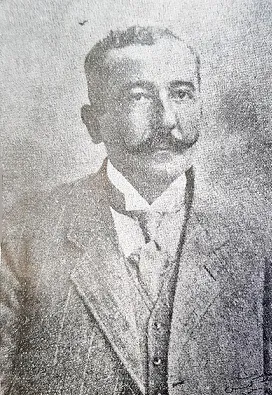
Lyricist
أحمد شوقي
1868–1932
Ahmed Shawqi never heard Umm Kulthum sing his greatest poems: he died in 1932, before her partnership with Riad Al-Sunbati turned his qasidas into the towering monuments of her repertoire. Crowned Amir al-Shu'ara — Prince of Poets — by his fellow writers in 1927, Shawqi was the last supreme master of the neoclassical qasida: court poet to the khedives, exiled to Spain during the First World War, and after his return the unrivalled poetic voice of Egypt and of Arabic letters at large. In the years after his death, Sunbati set five of his poems for her: "Salou Qalbi," "Wulida al-Huda," "Nahj al-Burda" — Shawqi's homage to al-Busiri's great ode to the Prophet — "Salou Ku'us al-Tila," and "Ila Arafat Allah." These settings sealed her authority as the voice of classical Arabic itself: verse of marble balance and Quranic cadence, demanding a singer who could bear its full weight line by line. Through her, Shawqi's poetry left the printed diwan and entered the memory of millions who would never open it — the Prince of Poets carried by the voice that outlived him.
1938 · Maqam Huzam
Salou Ku'us al-Tila (1938): Ahmed Shawqi's wine-song portrait of Umm Kulthum's own voice, set by Riad al-Sunbati in maqam Huzam — annotated and translated.
1946 · Maqam Rahat al-Arwah
Nahj al-Burda (1946): Shawqi's answer to al-Busiri's Burda, set by Sunbati in maqam Rahat al-Arwah — the most exalted of Umm Kulthum's prophetic praise songs.
1946 · Maqam Rast
Salou Qalbi (1946): Ahmed Shawqi's qasida in Sunbati's maqam Rast — the song that made 'goals are never attained by wishing' the proverb of a generation.
1949 · Maqam Rast
Wulida al-Huda (1949): Shawqi's mawlid hymn in Sunbati's maqam Rast — the boldest verses on faith, justice and equality Umm Kulthum ever sang.
1951 · Maqam Huzam
Ila Arafat Allah (1951): Ahmed Shawqi's Hajj qasida in Riad al-Sunbati's maqam Huzam setting — how Umm Kulthum's pilgrimage anthem came to be, with translation.
Concepts
The qasida — the classical Arabic ode — was the most prestigious form Umm Kulthum sang. A guide through Salou Qalbi, Al-Atlal, the Rubaiyat, and Nahj al-Burda.